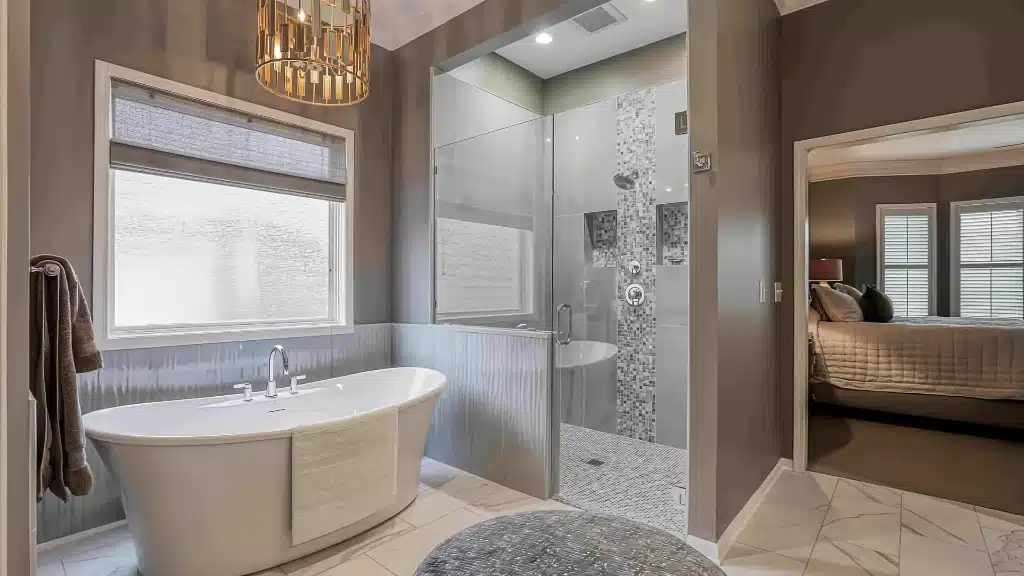
The Bathroom Remodel Planning Guide helps homeowners avoid costly mistakes before a single tool is picked up. Most bathroom remodels don’t go wrong because of bad taste—they go wrong because of poor planning.
Bad budget assumptions. Layout changes that ballooned the cost unexpectedly. A contractor who sounded great on the phone and disappeared mid-project. A shower that looked flawless at punch-out and had mold behind the walls eighteen months later.
We’ve walked into enough of those situations, called in to fix what someone else built, to know exactly where things fall apart. And in almost every case, the problems were preventable. Not with more money. With better information before the project started.
This guide covers the five things every homeowner needs to understand before a single tile comes off the wall: budget strategy, layout decisions, waterproofing, materials, and how to choose a contractor who won’t cost you twice. Work through these and you’ll go into your remodel with a plan that actually holds.
The Top 5 Things to Know Before a Bathroom Remodel
- Your budget needs a contingency buffer and not a wish-list number
- Decisions made after demo starts are the most expensive kind
- Waterproofing is what separates a 5-year remodel from a 20-year one
- Materials that look good in a showroom don’t always perform in a bathroom
- The contractor you hire matters more than any material you choose
1. Budget Strategy: Understanding Cost Before You Commit to a Number
Here’s the mistake almost everyone makes: they build a budget around a best-case scenario, then get blindsided when reality shows up on demo day.
Bathroom remodel costs are driven primarily by three things: scope, material selections, and what gets discovered once walls come down. Understanding how each of these works gives you a far more useful budget than any ballpark figure could.
Scope Is the Biggest Cost Driver
The scope of work determines everything else. A cosmetic refresh, swapping out the vanity, updating fixtures, replacing flooring, involves little to no plumbing or electrical work, modest labor, and primarily material costs. A full gut remodel, new shower, complete tile work, updated plumbing, custom vanity, new lighting, involves substantially more of all three.
Between those two extremes is a wide range of partial remodels: converting a tub to a walk-in shower, replacing tile throughout, adding a double vanity, or reconfiguring a layout. Each step up in scope adds meaningful cost. Being honest with yourself about what your project actually is, cosmetic, partial, or full gut, is the starting point for any realistic budget conversation.
The Contingency Buffer Is Part of the Budget, Not a Backup Plan
A contingency isn’t pessimism. It is what separates a manageable remodel from a stressful one.
Behind bathroom walls and under bathroom floors is where decades of deferred maintenance hide. Water damage, subfloor rot, outdated plumbing that doesn’t meet code, corroded supply lines, none of these show up in your initial quote because no one can see them until demo begins. When they surface (and they do), you need financial runway to address them without shutting the project down or making panicked decisions about cheaper alternatives.
Build your target budget based on honest scope. Then set aside a meaningful contingency on top, treating it as a planned part of the project, not an emergency reserve. The right cushion depends on the age of your home and scope of work. Your contractor can help you calibrate this. What matters is that you go in expecting surprises rather than hoping you won’t get any.
Material Selection Multiplies or Compresses Every Line Item
Within any given scope, material choices can swing the total significantly in either direction. The difference between a stock vanity and a semi-custom one, between builder-grade tile and large-format porcelain, between standard chrome fixtures and a coordinated designer finish, these are not aesthetic decisions in isolation. They are cost decisions with aesthetic consequences.
The most common budget mistake isn’t choosing expensive materials, it’s choosing them inconsistently. A modest tile paired with a high-end vanity and mid-range everything else often looks more cohesive and stays on budget better than spreading a limited budget evenly across premium finishes in every category.
Common Scope Creep That Derails Budgets
Scope creep is how a well-planned remodel grows beyond its original budget, gradually, decision by decision. Watch for these patterns:
- “While we’re in there” upgrades. Once walls are open, adding a shower niche, upgrading to a humidity-sensing exhaust fan, or switching tile selections feels incremental. Each decision is individually small. Together, they add up quickly.
- Mid-project material substitutions. The tile you chose is backordered. The alternative you fall in love with costs significantly more. This happens constantly, and it is almost always avoidable with better upfront planning.
- Electrical and plumbing surprises. Homes built before the mid-1990s, and there are a lot of them in North Dallas, often have wiring and plumbing that hasn’t been touched since original construction. When you open those walls, you frequently find work that needs to be done regardless of your original plan.
Why Low Bids Are Dangerous
A bid that comes in significantly below the others isn’t a deal, it is a question. How is that contractor planning to hit that number? The most common answers: cheaper materials than specified, faster and sloppier labor, no contingency built in for complications, or a scope that quietly excludes things the other bidders included.
Low-bid projects either end up looking like it, or they end up with change orders that push the final cost past what the competitive bids would have been. Sometimes both.
2. Layout Decisions: Get This Right Before Anyone Picks Up a Sledgehammer
Your layout decision is the single biggest cost lever in any remodel. Get it right before demo starts and you control your budget. Change your mind after the walls are open and you’re writing checks you didn’t plan for.
The Slab Foundation Reality
Many homes across North Texas, particularly those built from the 1970s through the early 2000s, sit on slab foundations. This is critical context for any bathroom remodel that involves relocating a drain.
In a home with a raised foundation or basement, moving a drain is a plumbing job. In a slab-foundation home, it becomes a demolition job. The concrete floor has to be core-drilled or saw-cut, the drain rerouted through the slab, and the concrete repoured. That process adds meaningful cost and time to any project and should be understood and priced explicitly before you commit to a layout that requires it.
This isn’t a reason to avoid layout changes when they’re genuinely warranted. It’s a reason to make that decision deliberately, with a clear-eyed understanding of what it actually involves, rather than discovering it mid-project.
Moving Plumbing: When It’s Justified and When It Isn’t
Some layout changes are worth the added complexity. The question is whether the functional improvement genuinely matches the investment.
Changes that tend to justify the cost:
- Converting a rarely-used jacuzzi tub alcove into a large, custom walk-in shower
- Combining two small, underperforming bathrooms into one well-functioning space
- Relocating a toilet to meaningfully open a cramped layout
- Adding a second sink to a vanity where the existing supply lines can support it nearby
Changes that usually don’t:
- Moving a toilet or vanity a small distance purely for aesthetics, with no functional gain
- Repositioning supply lines when existing locations already work for the planned layout
- Making changes to “see what’s possible” rather than to solve a real problem
The conversation about layout should happen before demo, with a contractor who can tell you exactly what a given change involves, not after walls are open and the options feel limited.
Keep It in Place When You Can
If the current drain and supply locations roughly match where your fixtures need to go, staying put almost always makes financial and logistical sense. Tub-to-shower conversions that use the existing drain location are among the most efficient major upgrades available. Double vanities can often be plumbed without moving supply lines at all, as long as the second sink lands within reasonable proximity to existing connections.
The best contractors will tell you this directly and explain why. If someone is eager to move everything without a clear functional rationale, ask for one.

3. Waterproofing and Ventilation: The Part Nobody Photographs, But Everyone Eventually Pays For
Nobody puts waterproofing in their bathroom mood board. Poor waterproofing is the number one reason bathrooms fail early, mold develops behind tile, and homeowners end up doing the same project twice.
Why Grout Is Not Waterproofing
This is the most important point in this entire guide: grout is not waterproof. Grout is porous and absorbs water. In a shower that gets used daily, water constantly works through grout lines and into whatever substrate sits behind the tile.
If what’s behind the tile is standard drywall even moisture-resistant drywall the result is a slow-motion failure. The water migrates. It may take several years or longer, but eventually you find rot, mold, or tiles that have lost their bond and are beginning to crack loose. By the time it’s visible, the damage behind the surface is usually extensive.
This is one of the clearest quality differences between a well-executed remodel and a poorly executed one. You can’t see it when the job is finished. You see it or don’t over the next decade.
What Proper Waterproofing Actually Looks Like
A correctly waterproofed shower starts with a purpose-built substrate such as cement board or a dedicated membrane system like Schluter KERDI or Wedi. These materials are designed to resist moisture at the substrate level before water ever reaches framing or drywall. Standard drywall even moisture-resistant varieties is not an appropriate substrate behind shower tile.
From there, every transition point in the shower needs deliberate attention:
- Corners and plane changes where the floor meets the wall and where two walls meet. These are the most common failure points because they flex subtly as a house settles over time. They require flexible waterproofing treatment, not just tile and grout bridging the gap.
- Niches and bench seats. Any recess built into the shower wall needs its own waterproofing layer, sloped toward the drain, before tile is set. A niche that collects standing water is a failure waiting to happen.
- The shower floor needs a consistent slope toward the drain (typically ¼ inch per foot minimum). Water that pools at the base of a wall will find its way through eventually.
- Wall-to-floor transitions. These joints should be caulked, not grouted. Grout cracks at these locations as the structure moves slightly over time. Properly applied caulk flexes with it.
How Waterproofing Quality Affects Long-Term Value
A shower that’s waterproofed correctly should perform for 20–30 years without issues. One that isn’t will begin showing failure signs — grout deterioration, tile movement, soft spots in the floor — within a few years. Remediating a failed shower means tearing out all the tile, removing the substrate, addressing any structural damage, and starting over. The cost and disruption of that remediation is dramatically higher than the cost of doing it right the first time.
When evaluating contractors, ask specifically what waterproofing system they use and why. A contractor who can’t answer that question in detail is telling you something important.
Ventilation: The Other Half of Long-Term Performance
Waterproofing handles moisture in the walls. Ventilation handles moisture in the air, which protects the ceiling, paint, cabinet finishes, and structural framing above the bathroom.
Many older homes have exhaust fans that are undersized for the room, positioned ineffectively, or vented into the attic instead of to the exterior. An attic-vented bathroom fan is essentially a controlled moisture injection into your roof structure. Over years, it causes the same kind of damage as poor waterproofing, just higher up.
When remodeling, it’s the natural time to upgrade: a properly sized fan matched to the room’s square footage, ideally with a humidity sensor that runs it automatically, vented through an exterior wall or roof cap. It’s a modest line item in a remodel budget with an outsized impact on the long-term health of everything else you’ve invested in.
4. Materials That Last: Choosing for Performance, Not Just Appearance
The bathroom is one of the harshest environments in any home, daily temperature swings, constant humidity, cleaning products, foot traffic, and periodic standing water. Materials need to perform in that environment for years, not just photograph well on install day.
Flooring: Tile vs. SPC Vinyl
Porcelain and ceramic tile are the established standard for bathroom floors. Porcelain in particular is genuinely waterproof through the body of the tile, not just surface sealed, and extremely durable under heavy use. Large format tile (24×48 and larger) has become a strong design choice for contemporary bathrooms: fewer grout lines, cleaner appearance, and easier ongoing maintenance. The tradeoffs are hardness underfoot, the cold feel without in floor heating, and the fact that grout still requires attention even when there’s less of it.
Stone Plastic Composite (SPC) vinyl has improved significantly as a category. Quality SPC is 100% waterproof through the core, warmer and softer underfoot than tile, and more forgiving at expansion joints, which matters in climates with temperature variation. It’s a legitimate option for bathroom floors, particularly in guest baths or spaces where comfort is a priority. The critical distinction is product quality. Budget LVP delaminates and warps in humid environments. Specify commercial grade or thick core products (6mm or higher) from manufacturers with a documented warranty for wet areas.
For shower floors and walls: Porcelain tile is the right material. SPC, acrylic, and other alternatives are not appropriate for surfaces in direct, sustained water contact.
Countertops: What Actually Holds Up
Quartz is the practical choice for most bathrooms. Non porous construction means no sealing required, no staining from toothpaste or cosmetics, and no bacteria harboring in the surface. It’s consistent in appearance, highly durable, and available in a wide range of styles, including convincing marble look options for homeowners who want that aesthetic without marble’s maintenance demands.
Marble is beautiful and worth specifying for the right homeowner, one who understands the material requires sealing, accepts that acidic products such as toothpaste and some skincare will etch the surface over time, and values the natural character of a material that develops patina with use. It’s best suited for lower traffic applications or homeowners who are genuinely committed to its care requirements. A heavily used master bath countertop in marble will show wear that quartz will not.
Granite sits between the two in both porosity and durability. It is more forgiving than marble in daily use, with a natural stone character that quartz engineered products do not fully replicate. A solid mid tier option for homeowners who prefer natural stone and are willing to seal it periodically.
Custom vs. Stock Materials: What the Difference Actually Means
The right balance depends on your priorities. In most bathrooms, a thoughtful selection of high quality stock materials outperforms a scattered mix of custom pieces chosen without a coherent plan.
Grout: The Upgrade Worth Making
Standard sanded grout stains, requires periodic sealing, and eventually cracks at transitions where movement occurs. Epoxy grout is stain proof, does not require sealing, and resists mold growth far better than standard options. It costs more and demands a more skilled installer because it has a shorter working time and is less forgiving of errors. But in a shower environment, specifying epoxy grout is a meaningful quality decision. Ask your contractor directly whether they use it and whether it is included in the quote.
For more on the materials we recommend and install, see our full bathroom remodeling page
5. Hiring the Right Contractor: Questions That Separate the Good from the Risky
Every other decision in this guide gets executed — well or poorly — by whoever you hire. Materials fail when installed incorrectly. Waterproofing fails when rushed or skipped. Timelines collapse when a contractor is overcommitted. The contractor is the multiplier on everything else you’ve planned.
Questions to Ask Before You Sign Anything:
- Are you licensed and insured in Texas? (Ask to see both certificates — not just verbal confirmation)
- Will you pull the required permits for this project?
- Who physically does the work — your direct employees or subcontractors?
- Can you provide references from bathroom remodels completed in the last 12 months?
- What waterproofing system do you use in showers, and why do you use that one?
- What does your contract specify about change orders and unforeseen conditions?
- What does your warranty cover, for how long, and what are its terms?
Red Flags That Should End the Conversation
- Requests more than 30–40% upfront before work begins
- Suggests skipping permits to save money or time
- Significantly lower bid than all other contractors with no explanation of scope differences
- No verifiable physical address or business registration
- Can’t provide recent, local references
- Vague or incomplete scope of work in the written quote — “bathroom remodel” without itemized line items
- No written contract, or pressure to commit before you’ve reviewed one in full
Bathroom Remodel Timeline: A Realistic Look
| Scope | Typical Duration |
|---|---|
| Cosmetic refresh (vanity, fixtures, flooring) | 3–7 days |
| Partial remodel (new shower, tile, vanity) | 1–3 weeks |
| Full gut remodel, no layout changes | 3–5 weeks |
| Full remodel with plumbing relocation | 5–8+ weeks |
What Extends Timelines
- Permit approval — typically 1–2 weeks depending on municipality and scope
- Special-order or custom materials — lead times can add weeks; confirm availability before finalizing selections
- Unforeseen conditions discovered during demo — water damage, failed waterproofing, outdated electrical
- Contractor backlog — quality contractors are frequently booked several weeks out; factor this into your planning
Ready to move from planning to action?

Bathroom Remodel Planning Checklist
| Category | Checklist Item |
|---|---|
| Budget | Define your scope honestly: cosmetic refresh, partial remodel, or full gut |
| Set your target budget based on that scope, not a wishlist | |
| Add a contingency buffer and treat it as part of the plan | |
| Identify must-haves vs. nice-to-haves and rank them | |
| Factor in permit fees for electrical, plumbing, and structural work | |
| Layout & Design | Decide whether to keep plumbing in place or relocate |
| Confirm foundation type: slab or raised | |
| Choose shower or tub configuration | |
| Plan vanity size and sink configuration | |
| Map out storage needs | |
| Plan lighting zones: task, ambient, accent | |
| Materials | Select floor material and confirm wet-area rating |
| Select shower wall tile (porcelain for water-contact areas) | |
| Choose vanity and countertop material | |
| Specify grout type (epoxy recommended for showers) | |
| Choose fixtures and hardware finish | |
| Verify material stock or document lead times | |
| Contractor Vetting | Collect at least 3 written, itemized quotes |
| Verify current license and insurance | |
| Request references from recent remodels | |
| Confirm contractor pulls all required permits | |
| Review contract details carefully | |
| Confirm start date and completion window in writing | |
| Before Work Starts | Identify alternate bathroom access |
| Clear and protect adjacent spaces | |
| Establish a direct point of contact | |
| Confirm communication frequency and format |
“Working with a Remodeling contractor in the Plano area? See how our design-build process handles each of these steps from first consultation through final walkthrough.”
Bathroom Remodel FAQs
Do you offer warranties and financing?
How long does a bathroom remodel take?
What adds the most value in a bathroom remodel?
Is a walk-in shower conversion worth it?
How do I avoid mold in a remodeled bathroom?
Do I need a permit for a bathroom remodel?
What's the best flooring for a bathroom?
What's the difference between waterproof and water-resistant flooring?
Should I remodel my bathroom before selling?
What questions should I ask a bathroom remodeling contractor?
What are the most common bathroom remodel mistakes?
What are the most common bathroom remodel mistakes?
Start Your Remodel the Right Way
The difference between a bathroom remodel that goes smoothly and one that becomes a months-long headache almost always comes down to planning, not budget size, not style choices, and not even the finishes you select.
Get the plan right first. Understand your scope honestly. Build in a real contingency. Make layout decisions before demo. Specify waterproofing explicitly in your contract. Choose materials that will perform, not just impress. And hire a contractor who can answer every question in this guide without hesitation.
If you’re ready to move from planning to real conversations, The Flooring and Remodeling Shop offers free design consultations, no pressure, no obligation. We’ve completed hundreds of bathroom projects and will give you an honest assessment of what your specific project involves before you commit to anything.
Ready to talk specifics? Visit our Bathroom Remodeling page to see how we handle projects from first consultation through final walkthrough
The Flooring and Remodeling Shop 📍 2830 W. 15th St. Ste. 1, Plano, TX 75075 📞 (972) 746-1575
Free design consultation. No obligation. Just a real conversation about your project.